Functional Nutrition & Mental Health

Your mental health doesn’t exist separately from your body.

Sometimes, understanding why you feel the way you do requires looking beyond thoughts and behaviors. Therapy can help you develop emotional regulation skills, change patterns, and create healthier ways of relating to yourself and others. But there are also physical and physiological factors that can influence how you regulate emotions and function day to day. This is where functional nutrition comes in.

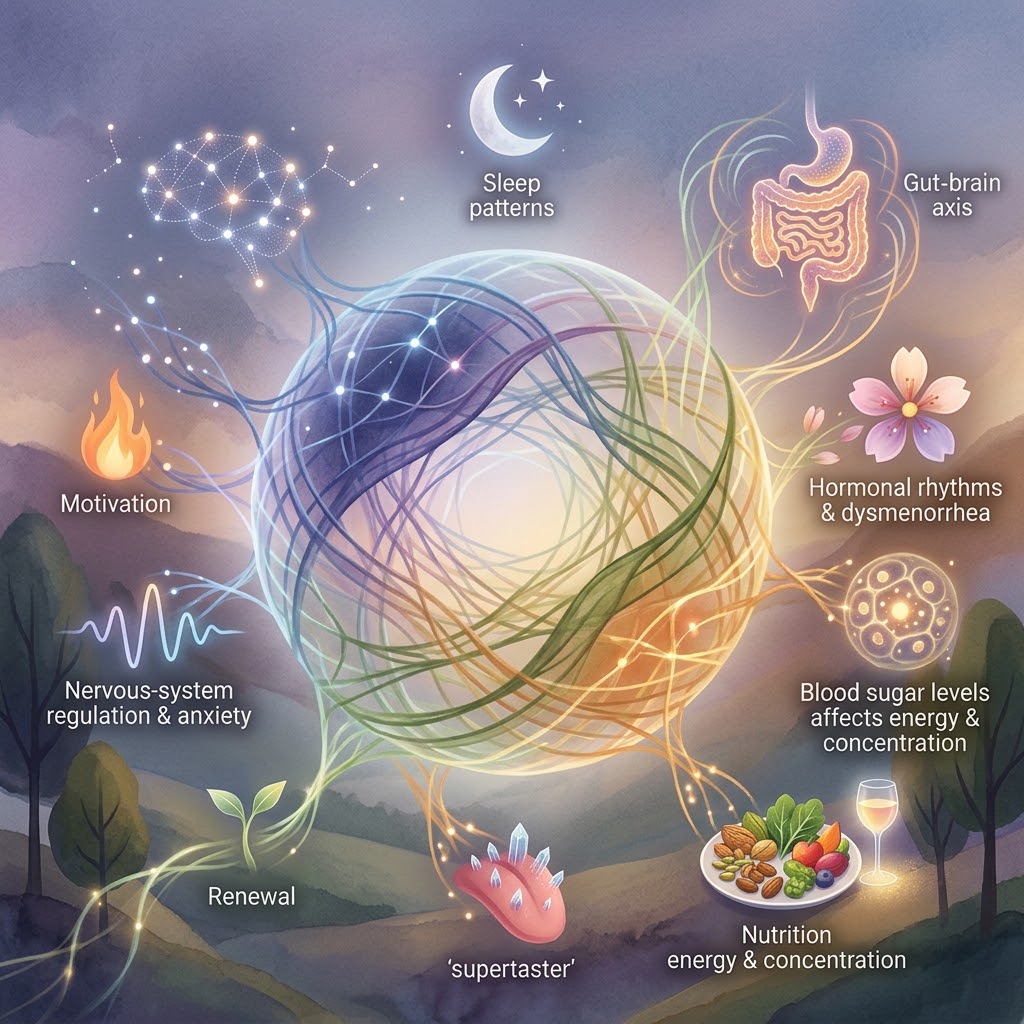
What is functional nutrition?

Functional nutrition looks at the relationship between nutrition, physiology, lifestyle, and overall wellbeing rather than viewing food simply as “good” or “bad.”
It asks questions such as:
The goal isn’t to reduce mental health to nutrition.
It’s to understand the bigger picture.

When Mental Health and Physical Health Overlap

Certain conditions and experiences can have both psychological and physiological components.
Depending on your individual situation, I may help you recognize patterns and identify questions that could be worth discussing with your physician or another qualified healthcare professional.
 
This may include exploring the relationship between mental health and experiences such as:

This doesn’t mean that food causes a mental health condition or that nutrition can “cure” one.
It means that your physical experiences are worth paying attention to.
An Integrative Approach

I believe that meaningful change requires more than understanding something intellectually.
You can know why you’re anxious and still feel anxious.
 
My background in psychotherapy allows me to look at these questions through a mental-health lens.
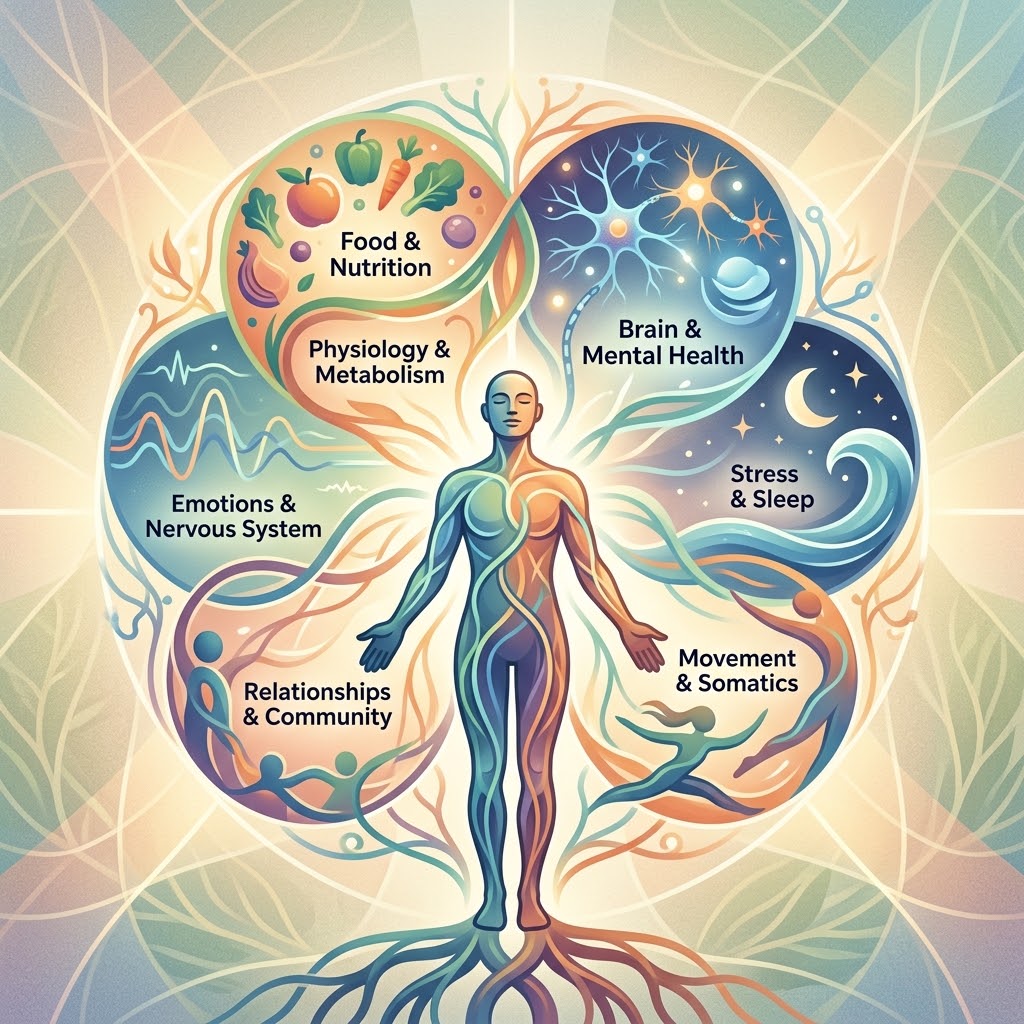
Rather than treating nutrition as a completely separate subject, I am interested in how food, physiology, emotions, behavior, movement, stress, relationships, and the nervous system interact with one another.
 
This fits naturally with my broader therapeutic approach, which already incorporates somatic work, movement, creativity, behavioral strategies, and traditional talk therapy.
 
Sometimes the question isn’t simply:
“What’s wrong with me?”
It may be:
“What is happening in my whole system, and what information have I been missing?”

What Functional Nutrition Is — and Isn’t

Functional nutrition is not a replacement for medical care.
 
I am a Licensed Marriage and Family Therapist, not a physician or medical provider. I do not diagnose or treat medical conditions, prescribe medication, interpret medical tests as a physician would, or provide medical treatment.
 
I am also not a Registered Dietitian or nutritionist, and I do not provide individualized medical nutrition therapy or prescribe diet plans.
 
Instead, I use functional-nutrition-informed education and exploration as part of a broader mental-health practice.
 
When something falls outside the scope of psychotherapy or my training, I may encourage you to speak with an appropriate healthcare professional for further assessment. Depending on the concern, that may include your physician, psychiatrist, registered dietitian, or another qualified provider.
 
You don’t have to choose between caring for your mental health and caring for your physical health.
Sometimes, understanding one helps you understand the other.
 
My goal is to help you develop a more complete picture of yourself, so that therapy isn’t about creating change at just one level, but about understanding and transforming the entire system.